
Filament Guide 101
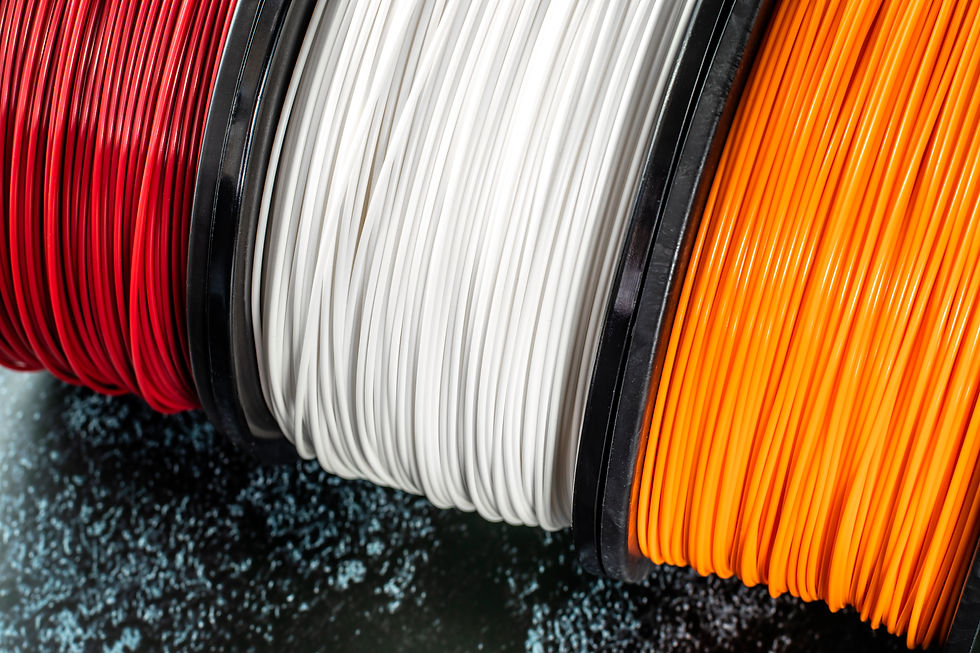
Filament is a crucial component in 3D printing, serving as the material from which objects are created. Understanding the different types of filament, their properties, and how to use them effectively can greatly enhance your 3D printing experience. This guide will cover the basics of 3D printing filament.
Types of Filament
PLA (Polylactic Acid)
Biodegradable and eco-friendly
Easy to print, ideal for beginners
Available in a variety of colors and finishes
ABS (Acrylonitrile Butadiene Styrene)
Durable and impact-resistant
Requires higher printing temperatures
Can emit fumes; good ventilation is necessary
PETG (Polyethylene Terephthalate Glycol)
Strong and flexible
Good layer adhesion
Less prone to warping compared to ABS
TPU (Thermoplastic Polyurethane)
Flexible and rubber-like
Ideal for making parts that require elasticity
Can be more challenging to print
Choosing the Right Filament
When selecting filament, consider the following factors:
Application: What will the printed object be used for?
Printer Compatibility: Ensure your 3D printer can handle the filament type.
Printing Temperature: Check the recommended temperature range for the filament.
Strength and Flexibility: Determine the required mechanical properties of the final print.
Storage and Handling
Proper storage and handling of filament can significantly affect print quality:
Keep Dry: Moisture can degrade filament quality; store in a dry environment.
Airtight Containers: Use vacuum-sealed bags or containers with desiccants.
Temperature Control: Store in a cool area away from direct sunlight.
Printing Tips
To achieve the best results when printing with filament:
Calibrate Your Printer: Regular calibration ensures optimal print quality.
Adjust Settings: Modify temperature, speed, and layer height based on the filament type.
Use Rafts or Supports: For complex prints, consider using rafts or supports to improve adhesion.
Troubleshooting Common Issues
Here are some common issues that can arise when printing with filament, along with potential solutions:
Clogged Nozzle: Clean the nozzle and ensure proper filament feeding.
Warpage: Use a heated bed and proper adhesion methods.
Stringing: Adjust retraction settings and print temperature.
Conclusion
Understanding filament types, properties, and best practices is essential for successful 3D printing. By following this guide, you'll be better equipped to choose the right filament for your projects and troubleshoot any issues that may arise.


Comments